


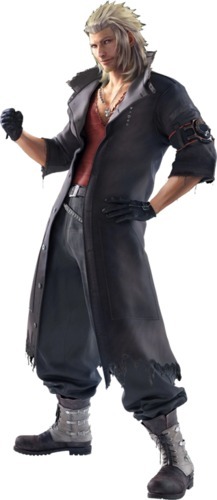
The path of the pugilist is one of incessant training aimed at mastering the traditional techniques of hand-to-hand combat. Their preference for fighting at close quarters makes negotiating distances an absolute necessity. Many among them accomplish this by avoiding burdensome armor, allowing for maximum mobility while they move in for the kill.
Role: Black Belts excel as front-line fighters, where their sheer toughness enables them to be struck again and again and again and again and then turning that punishment back upon their foes.
Alignment: Any
Hit Die: D12
Starting Wealth: 3d6 × 10 gil (average 105 gil.) In addition, each character begins play with an outfit worth 10 gil or less.
Class Skills
Acrobatics (Dex), Climb (Str), Craft (Int), Escape Artist (Dex), Handle Animal (Cha), Intimidate (Cha), Knowledge (dungeoneering) (Int), Knowledge (local) (Int), Knowledge (martial), Perception (Wis), Perform (Song) (Cha), Profession (Wis), Ride (Dex), Sense Motive (Wis), and Swim (Str).
Skill Ranks Per Level: 4 + Int modifier
Table: Black Belt
| Level | Base Attack Bonus | Fort Save | Reflex Save | Will save | Class Features | Deck Size |
| 1 | +1 | +2 | +2 | +1 | Martial cunning, martial training, unarmed training, battlefield brawling | 2 |
| 2 | +2 | +3 | +3 | +1 | Martial flurry (Two-Weapon Fighting), brawling talent, prizefighter’s resolve x3 (1 round), adrenaline, second wind 2 | 3 |
| 3 | +3 | +3 | +3 | +2 | Bonus combat feat or athletic talent, Focus (Vital strike), Pugilist’s Conditioning, Leather Body, | 5 |
| 4 | +4 | +4 | +4 | +2 | Slugger punch 1/encounter, brawling talent, wooden body | 6 |
| 5 | +5 | +4 | +4 | +2 | Footwork +1, Pugilism (Magic) | 8 |
| 6 | +6/+1 | +5 | +5 | +3 | Damage reduction 2/-, brawling talent, second wind 4, | 9 |
| 7 | +7+2 | +5 | +5 | +3 | Bonus combat feat or athletic talent, prizefighter’s resolve x4 (2 rounds), | 11 |
| 8 | +8/+3 | +6 | +6 | +4 | Stone body, focus (Devastating strike) martial flurry (Improved Two-Weapon Fighting), brawling talent | 12 |
| 9 | +9/+4 | +6 | +6 | +4 | Footwork +2, Pugilism (Cold iron and silver) | 14 |
| 10 | +10/+5 | +7 | +7 | +5 | Damage reduction 3/-, slugger punch 2/encounter, brawling talent, second wind 6, | 15 |
| 11 | +11/+6/+1 | +7 | +7 | +5 | Bonus combat feat or athletic talent, pugilist’s conditioning | 17 |
| 12 | +12/+7/+2 | +8 | +8 | +5 | Martial talent, pugilism (Alignment), prizefighter’s resolve (3 rounds), steel body, | 18 |
| 13 | +13/+8/+3 | +8 | +8 | +6 | Focus (Improved Vital Strike), Footwork +3, | 20 |
| 14 | +14/+9/+4 | +9 | +9 | +6 | Damage reduction 4/-, prizefighter’s resolve x5, brawling talent, second wind 8, | 21 |
| 15 | +15/+10/+5 | +9 | +9 | +7 | Bonus combat feat or athletic talent, martial flurry (Greater two-weapon fighting), | 23 |
| 16 | +16/+11/+6/+1 | +10 | +10 | +7 | Diamond body, slugger punch 3/encounter, brawling talent | 24 |
| 17 | +17/+12/+7/+2 | +10 | +10 | +7 | Martial talent, pugilism (Adamantine), prizefighter’s resolve (4 rounds), | 26 |
| 18 | +18/+13/+8/+3 | +11 | +11 | +8 | Damage reduction 5/-, focus (Greater Vital Strike), brawling talent, second wind 10 | 27 |
| 19 | +19/+14/+9/+4 | +11 | +11 | +8 | Bonus combat feat or athletic talent, pugilist’s conditioning, | 29 |
| 20 | +20/+15/+10/+5 | +12 | +12 | +9 | Adamantine body, brawling talent, | 30 |
Class Features
Weapon and Armor Proficiencies
A black belt is proficient with all light and one-handed weapons from the monk and close weapon groups (Including exotic weapons). He is also proficient with light armor and shields (except tower shields).
Limit Break
At 1st level, a black belt gains the ability to use limit breaks. At the start of each day the black belt chooses Battle or Stoic as his limit break mode. When a black belt uses a limit break, they may use a limit break from their chosen mode or the following limit break, unique to them:
Perfect Martial Arts (Ex): This limit break allows the black belt to enter a state of focus, allowing them to land near-impossible blows. While this limit break is active, the first melee combat maneuver check or melee attack the black belt makes each round with an unarmed strike or any light or one-handed weapon from the monk or close weapon groups is treated as a natural 20. However, the critical multiplier is x2, if it would be higher. Any abilities you have that increase the critical multiplier of your unarmed strikes also increases this multiplier. This limit break lasts for 1 round per limit break stack consumed. Activating this limit break requires only a swift action.
Martial Cunning (Ex)
If the black belt’s Intelligence score is less than 13, it counts as 13 for the purpose of meeting the prerequisites of combat feats.
Unarmed Training (Ex)
At 1st level, a black belt gains Unarmed Combatant and Deft Maneuvers as bonus feats (Even if he does not meet the prerequisites). A black belt applies his full Strength modifier (not half) on damage rolls for all his unarmed strikes.
Usually, a black belt’s unarmed strikes deal lethal damage, but he can choose to deal nonlethal damage instead with no penalty on his attack roll. He has the same choice to deal lethal or nonlethal damage while grappling.
A black belt’s unarmed strike is treated as both a manufactured weapon and a natural weapon for the purpose of spells and effects that modify either manufactured weapons or natural weapons.
A black belt also deals more damage with his unarmed strikes than others, as shown on the table below. (If a black belt gains an improved unarmed strike damage via another class, such as monk, the two stack to determine the unarmed strike progression.)
Table: Small, Medium, or Large Black Belt Unarmed Damage
| Level | Damage (Small) | Damage (Medium) | Damage (Large) |
| 1st-3rd | 1d4 | 1d6 | 1d8 |
| 4th-7th | 1d6 | 1d8 | 2d6 |
| 8th-11th | 1d8 | 1d10 | 2d8 |
| 12th-15th | 1d10 | 2d6 | 3d6 |
| 16th-19th | 2d6 | 2d8 | 3d8 |
| 20th | 2d8 | 2d10 | 4d8 |
Martial Training (Ex)
At 1st level, a black belt counts his total black belt levels as both warrior levels and monk levels for the purpose of qualifying for feats. He also counts as both a warrior and a monk for feats and magic items that have different effects based on whether the character has levels in those classes (such as Stunning Fist and a monk’s robe).
Battlefield Brawling
Black belts are trained in the use of simple but powerful unarmed combat techniques. Unlike the powers of a monk, which rely on utilizing a mystical source of energy called ki, a black belt’s techniques rely on simple combat prowess.
Starting at 1st level, a black belt can construct a “deck” of abilities known as Brawling Techniques. At the start of each day, or after 5 minutes rest, a black belt can select any number of brawling techniques he knows that he is a high enough level to select, up to his maximum “deck size”, as listed on Table: Black Belt (See above) and add them to his deck. A black belt can use any ability in his active deck at-will.
Brawling techniques are divided between Strikes (S) and Techniques (T). Unless otherwise stated, all brawling techniques are extraordinary abilities. Strikes are offensive abilities that can usually be used whenever he would make a normal unarmed strike for any reason (Or using weapons that “count” as being unarmed, such as while using gauntlets or knuckle claws. Though many brawling techniques refer to “unarmed strikes”, this is simply a shorthand and attacks with those weapons also count), though some strikes (Such as sovereign fist) state what type of action they require. Techniques, on the other hand, are defensive or utility abilities which always state how they’re used.
If a brawling technique requires a saving throw, it is calculated at 10 + half the black belt’s level + his Strength modifier, unless otherwise stated.
Unless otherwise stated, only one Strike ability can be used in place of an unarmed strike. For example, you couldn’t use the Twinstrike brawling technique and have both unarmed strikes be Leg Sweeps.
Some brawling techniques multiply your “unarmed strike damage”, this means that you roll your unarmed damage dice for the attack that many times and add the results together before adding bonuses from Strength, prizefighter's spirit, weapon abilities (such as flaming), precision-based damage, and other damage bonuses. These extra damage dice are not multiplied on a critical hit or when using the vital strike feat, but are added to the total.
All brawling techniques are assigned a level, meaning you need to have that many black belt levels in order to assign them as one of your techniques. Some brawling techniques also cost Adrenaline to use, this will be noted in the name next to its designation.
As an example:
Ability 1 (S, A:2):
Ability 2 (T, LV5):
This means ability 1 is a Strike that costs 2 Adrenaline to use, while ability 2 is a technique that requires you to have 5 black belt levels, can be used for free, or is a passive effect. Not all strikes cost adrenaline, while not all techniques are free.
- For a list of all brawling techniques, as well as the levels they can be added to your deck, click here.
Brawling Talent
As a black belt gains experience, he learns a number of talents that improve his hand-to-hand combat abilities. Starting at 2nd level, the black belt gains one brawling talent. He gains an additional brawling talent for every 2 levels of black belt attained after 2nd. Unless specified otherwise, a black belt cannot select an individual talent more than once.
Black belt talents are divided between "combat" and "athletic" talents. Combat talents are abilities that, as the name implies, represent his combat instincts and training, abilities that are far more fundamental than his brawling techniques. Athletic talents, on the other hand, represent the black belt's physical conditioning and his dedication to transforming his body from that of an ordinary member of his race into a mighty temple of flesh and bone.
A black belt may choose a brawling talent from the list here
Martial Flurry (Ex)
Starting at 2nd level, a black belt can make a martial flurry as a full-attack action. When doing so, a black belt has the Two-Weapon Fighting feat when attacking with any combination of unarmed strikes or light or one-handed weapons with the “monk” special feature. He does not need to use two different weapons to use this ability. A black belt applies his full Strength modifier to his damage rolls for all attacks made with martial flurry, whether the attacks are made with an off-hand weapon or a weapon wielded in both hands, even if he has the Iron Fist talent. A black belt can substitute disarm, sunder, and trip combat maneuvers for unarmed attacks as part of martial flurry. A black belt with natural weapons can’t use such weapons as part of a martial flurry, nor can he make natural weapon attacks in addition to his martial flurry attacks.
At 8th level, the black belt gains use of the Greater Two-Weapon Fighting feat when using martial flurry. However, he does not get his third attack until his 15th black belt level rather than when he has a base attack bonus of +11.
Prizefighter's Resolve (Ex)
At 2nd level, a black belt’s conditioning and intense focus allow him to momentarily ignore the pain and the effects of injury. When an opponent strikes the black belt, the injury does not immediately affect him. Instead, he has a delayed damage pool that allows him to stall the effects of damage. This pool begins at 0 at the start of each encounter. When the black belt is damaged, any hit point damage the attack deals is added to his delayed damage pool. At the end of his next turn, he takes damage equal to the total stored in this pool, which then resets to 0. Any healing he receives (Including effects that only heal non-lethal damage), other than healing granted by his second wind ability, can either recover his regular hit points or reduce the damage in his delayed damage pool. He can split the healing between his hit points or his delayed damage pool as he wishes and he is not forced to reduce his delayed damage pool if he does not wish to, as a full pool allows him to make better use of his prizefighter’s spirit ability.
Special effects tied to an attack, such as poison or energy drain, still function as normal. For example, if you were bitten by a spider, you would still need to make a Fortitude save against the poison, even though the damage from the bite shifts into the delayed damage pool.
At 2nd level, your delayed damage pool can hold a number of points of damage equal to 3 x his black belt level. At 7th level his delayed damage pool increases to 4 x black belt level and at 14th level it increases to 5 x his black belt level.
At 7th level, rather than taking the damage at the end of his turn, the black belt may choose to “retain” the damage held in his delayed damage pool until the end of his next turn, instead. At the end of that turn, he takes all damage in his delayed damage pool, regardless of whether it was “retained” damage or “new” damage. At 12th and 17th level, he may retain the damage for an additional turn.
(For example, turn 1 the black belt adds 5 to his delayed damage pool. Turn 2, he chooses to retain his delayed damage pool of 5. Turn 3, his delayed damage pool increases to 8 and at the end of that turn, he takes 8 points of damage. His delayed damage pool is then reset to 0).
Adrenaline:
At 2nd level, a black belt makes his mark upon the world with almost unbelievable acts, both athletic and combative, pushing his body beyond the boundaries of what many consider to be physically possible. At the start of each day, a black belt gains a number of adrenaline points equal to his Constitution modifier (minimum 1). His adrenaline goes up or down throughout the day, but usually cannot go higher than his Constitution modifier (minimum 1), though feats and magic items can affect this maximum. A black belt spends adrenaline points in a number of ways, and regains points in the following ways:
Filling up your Delayed Damage Pool: At 1st level, whenever the black belt’s delayed damage pool becomes full, he regains 1 adrenaline point. At 7th and 14th level, he gains an additional adrenaline point when his delayed damage pool becomes 50% and 25% full (rounded down), respectively.
Killing Blow or Knockout Blow with a Light or One-Handed Melee Weapon from the Monk or Close Weapon Groups: When the black belt reduces a creature to 0 or fewer hit points or causes a creature to gain 1 or more points of non-lethal damage in excess of its current hit points with a light or one-handed melee weapon from the Monk or Close weapon groups, he regains 1 adrenaline point. Destroying an unattended object, reducing a helpless or unaware creature to 0 or fewer hit points, or reducing a creature that has fewer Hit Dice than half the black belt’s character level to 0 or fewer hit points (or knocks them out via nonlethal damage) doesn’t restore any points.
Spending a Full-Round Action: As a full-round action that can be combined with the total defense action, a black belt can intentionally stimulate the production of adrenaline within his body, gaining 1 adrenaline point. However, doing so is physically demanding, causing him to take non-lethal damage equal to half his delayed damage pool’s maximum capacity. At 7th and 14th level, this reduces to 25% and 10% of his delayed damage pool’s maximum capacity (rounded down), respectively.
Second Wind (Ex)
At 2nd level, the black belt can push his body to the absolute limits and unlock ever greater reserves of strength. Whenever the black belt makes a successful attack with an unarmed strike or with a weapon with the “monk” special quality, he reduces the amount of damage in his delayed damage pool by 2 or heal 2 points of nonlethal damage.
At 6th level and every four levels thereafter, the amount reduced or healed by each successful attack is increased by an additional two points, to a maximum of 10 points per successful attack at 18th level.
If the attack in question is not a combat technique, the black belt doubles this reduction/healing.
Bonus Combat Feat or Athletic Talent (Ex)
At 3rd level and every 4 levels thereafter, a black belt gains a bonus combat feat in addition to those gained from normal advancement. The black belt must meet the prerequisites of the selected bonus combat feat. Alternatively, a black belt may choose to forgo this bonus feat to instead gain an additional athletic (but not combat) talent.
Also at 3rd level, and whenever he would gain a bonus combat feat or athletic talent via this ability, a black belt can choose to learn a new combat feat in place of any combat feat he has already learned (Excluding any specified bonus combat feat, such as the one granted by the Mixed Martial Arts talent). In effect, the black belt loses the previous combat feat in exchange for the new one. The old feat cannot be one that was used as a prerequisite for another feat, prestige class, or other ability. A black belt can only change one feat at any given level, and must choose whether or not to swap the feat at the time he gains a new bonus combat feat for the level (the feat he changes to can serve as the prerequisite for his new bonus combat feat, or vice versa. The changed feat can be one he meets the prerequisites for now, even if he did not at the level he gained the original combat feat).
Focus (Ex)
Starting at 3rd level, a black belt can take the opportunity to focus himself and prepare for a singular, devastating blow as a move action, allowing him to make a single attack with an unarmed strike or one-handed weapon with the “monk” special feature as a standard action before the end of his next turn. When doing so, a black belt has the Vital Strike feat and doubles the attack and damage bonus granted by his prizefighter’s spirit ability. A black belt applies 1.5x his strength modifier to this attack (If he has an ability that increases how much damage he does when using a weapon two-handed, it can apply to this attack). A black belt with natural weapons can’t use such weapons for this attack.
At 8th level, the black belt gains use of the Devastating Strike feat, at 13th level he gains the use of the Improved Vital Strike feat and triples the damage bonus granted by prizefighter’s spirit and at 18th level he gains use of the Greater Vital Strike feat and quadruples the damage bonus granted by the prizefighter’s spirit ability.
Pugilist's Conditioning (Ex)
Starting at 3rd level, a black belt gains Toughness as a bonus feat (If he already had this feat, he instead gains any other combat feat he would have qualified for at the level he gained toughness instead). At levels 11 and 19, he gains 1 additional hit point per hit die (Not per black belt level) and increases the bonus on checks and saving throws his toughness feat provides by an additional +2 (to +6 then to +8).
Leather Body (Ex)
Rather than dexterously evading blows, black belts often rely on their sheer physical conditioning to protect themselves against assault. At 3rd level, Instead of gaining a Dexterity modifier to AC (Any bonuses or penalties he would have are ignored), the black belt gains his Strength bonus as a natural armour bonus to AC, which stacks with any natural armour he might otherwise have. If a black belt's strength score would be reduced to 9 or less, leather body ceases to function.
Although this natural armour is limited by the maximum Dexterity bonus of any worn armour, he does not lose his natural armour in situations where he would normally lose his Dexterity modifier to AC, such as being caught flat-footed or if an opponent successfully uses the feint action against him.
This ability allows a black belt to take feats or make use of magic items that require him to have a natural armour bonus. However, he only benefits from those feats or items as long as leather body is actually providing him with a natural armour bonus. (For example, while a black belt can take the improved natural armour feat, his armour must have a maximum dexterity bonus of at least +1. Likewise, if his strength score drops to 11 or less, any such feats or magic items cease functioning.)
Additionally, for the purposes of this ability, any armour the black belt wears increases the maximum Dexterity bonus allowed by 1. For every 4 levels of black belt he has after 3rd, this bonus increases by +1. There is no “upper limit” to the increase of the maximum dexterity bonus allowed. A black belt may disable or enable leather body as a free action once per turn at the start of his turn.
This ability does not stack with armour training, agility training or armoured flexibility.
Wooden Body (Ex)
At 4th level, the black belt’s physical conditioning has improved to the point that to strike him is likened to striking at a tree. Whenever he would take damage from his delayed damage pool, that damage is taken as nonlethal damage, rather than as lethal damage. If the black belt has temporary hit points, those are lost before he takes non-lethal damage, as if he'd taken lethal damage.
Black belts who are immune to nonlethal damage instead continue to take the damage from the delayed damage pool as lethal damage.
Slugger Punch (Ex)
At 4th level, once per encounter, a black belt can unleash a devastating attack that can instantly knock a target senseless. He must announce this intent before making his attack roll. If the black belt hits and the target takes damage from the blow, the target must succeed at a Fortitude saving throw (DC 10 + half of the black belt’s level + his Strength modifier) or become dazed for 1d6 rounds. Each round on its turn, the dazed target may attempt a new saving throw to end the effect as a full-round action that does not provoke attacks of opportunity. Creatures immune to critical hits or nonlethal damage are immune to this ability. At 10th level, the black belt may use this ability twice per encounter; at 16th level, he may use it three times per encounter.
Pugilism (Ex)
At 5th level, a black belt’s unarmed strikes are treated as magic weapons for the purpose of overcoming damage reduction. At 9th level, his unarmed attacks are also treated as cold iron and silver for the purpose of overcoming damage reduction. At 12th level, he chooses one alignment component: chaotic, evil, good, or lawful; his unarmed strikes also count as this alignment for the purpose of overcoming damage reduction. (This alignment component cannot be the opposite of the black belt’s actual alignment, such as a good black belt choosing evil strikes.) At 17th level, his unarmed attacks are also treated as adamantine weapons for the purpose of overcoming damage reduction and bypassing hardness.
Footwork (Ex)
At 5th level, whenever the black belt moves at least 10ft, fights defensively or uses the total defense action, he gains a +1 dodge bonus to AC. At 9th and 13th level this dodge bonus increases by 1. The black belt can only gain this dodge bonus once each round.
Damage Reduction (Ex)
At 6th level, the black belt’s body grows ever more tolerant to punishment, granting him damage reduction 2/-. At 10th level and every four levels thereafter this damage reduction increases by 1.
Stone Body (Ex)
At 8th level, the black belt can take extreme amounts of damage and continue his fight onwards. If a single attack would result in his delayed damage pool becoming full and deal damage in excess of that pool, the excess damage is taken as nonlethal damage. (For example, at 8th level the black belt has a delayed damage pool of 32. If he has 22 points in his pool and takes 20 points of damage, 10 of that damage goes into his delayed damage pool while the other 10 is taken as nonlethal damage).
Additionally, the black belt treats his hit point total as 50% higher for the purposes of determining if he would be knocked unconscious due to nonlethal damage, up to his hit point maximum. (So, if he has 50 hit points, he needs to take 76 points of nonlethal damage to be knocked unconscious, assuming his hit point maximum is greater than 76. However, if, in this instance, he has a maximum of 60 hit points, he instead needs to take 61 points of damage to be knocked unconscious, rather than 51).
Black belts who are immune to nonlethal damage gain no benefit from this ability.
Steel Body (Ex)
At 12th level, the black belt can truly test his mettle. When the black belt takes enough damage to fill his delayed damage pool, all further damage taken until the start of his next turn is converted to nonlethal damage instead. He cannot use this ability again until his delayed damage pool is reset. (In other words, retaining a full pool or only reducing it by a small amount to fill it on the next round won’t trigger this ability again.).
Additionally, the black belt treats his hit point maximum as 50% higher than it really is when determining if nonlethal damage would be converted to lethal damage.
Black belts who are immune to nonlethal damage gain no benefit from this ability.
Diamond Body (Ex)
Not content with mere iron, the black belt trains his body to become as unbreakable as diamond. From 16th level, as long as the black belt has a full delayed damage pool, he has Strong: Damage. Meaning that both lethal and nonlethal damage from any source is halved. (The imperil status effect functions normally, meaning he takes normal damage from that source.).
Additionally, the black belt is only knocked unconscious when his nonlethal damage becomes greater than his hit point maximum, rather than exceeding 1.5x his hit point total.
Adamantine Body (Ex)
Once unbreakable, the black belt can strive only to become immortal. At 20th level if the black belt has not yet been knocked unconscious due to nonlethal damage, all damage that would reduce him to below 1 hit point is instead taken as nonlethal damage. Black belts who are immune to nonlethal damage gain no benefit from this ability.
